
Dr. Michael Magdy, Physiotherapist7 min read
Understand hands-on treatment and when it delivers the best results.
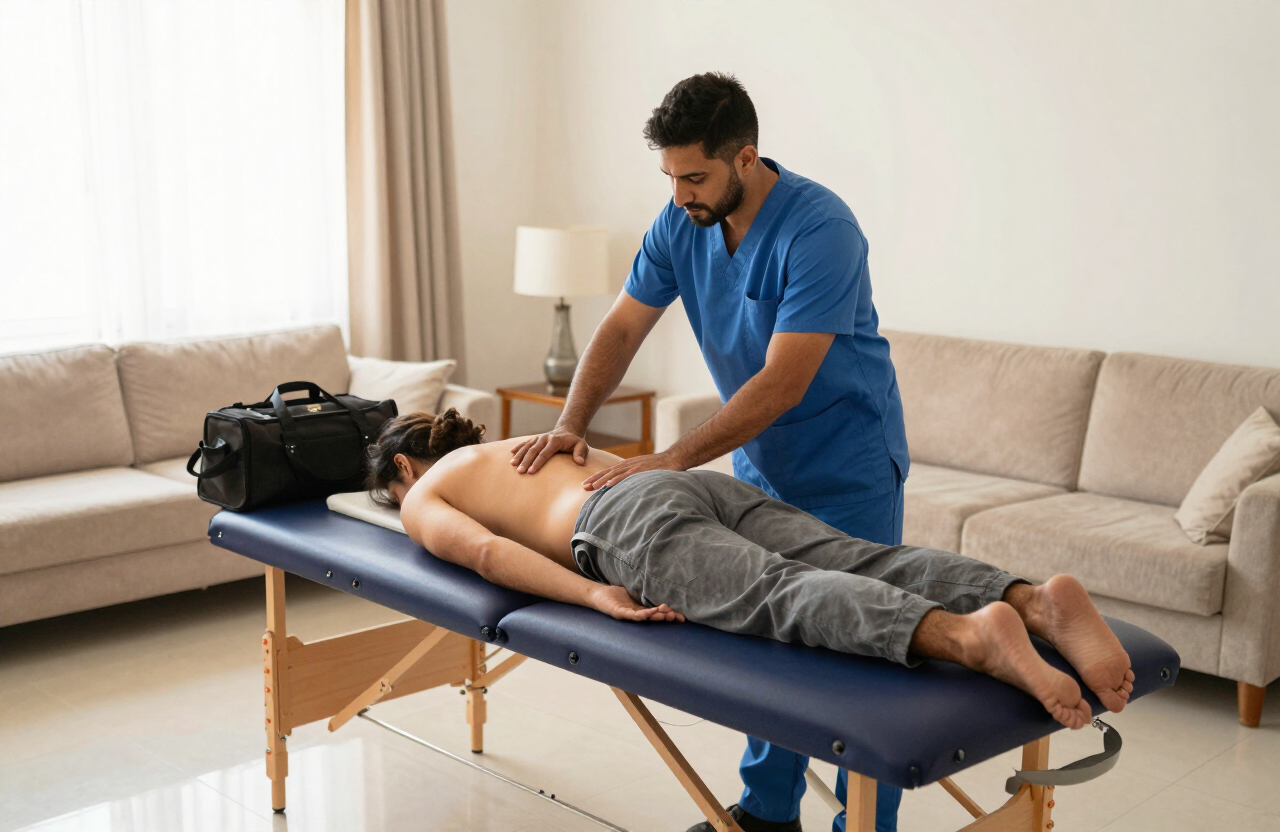
Manual therapy is a broad clinical term covering skilled, hands-on techniques applied to joints, muscles and nerves in order to reduce pain and restore movement. This article is written for patients who have been offered hands-on treatment and want to understand what it involves, what evidence supports it, and where its limits lie.
It is useful to state at the outset that manual therapy is a component of a treatment plan rather than a plan in itself. Applied to the right presentation and combined with active rehabilitation, it accelerates progress; applied indefinitely on its own, it produces short windows of relief that close again.
What the techniques actually involve
Joint mobilisation uses graded oscillatory pressure at the edge of available movement to improve glide within a stiff joint. Soft-tissue techniques address muscle tone, adhesions between tissue layers and tender points. Muscle energy techniques use the patient's own gentle contraction against resistance to lengthen a shortened muscle. Neural mobilisation gently moves a sensitised nerve through its interface to reduce mechanosensitivity.
The physiological effects are both local and central. Locally, tissue extensibility and circulation improve; centrally, the input from the treated area alters pain modulation in the nervous system, which explains why relief is often felt immediately and beyond the treated segment.
Who benefits most
Presentations that respond well include stiffness following immobilisation in a cast or sling, restricted shoulder movement in adhesive capsulitis, cervicogenic headache, mechanical joint restriction in the mid-back, and painful muscle guarding after an acute episode.
Presentations that respond less well include widespread pain conditions without a clear mechanical component, unstable joints requiring stability rather than more range, and inflammatory joint disease during a flare. Recognising the difference is a core clinical skill and protects the patient from an inappropriate course of treatment.
Warning signs that warrant seeing a specialist first
Manual treatment should be preceded by medical assessment if there is significant unexplained weight loss, fever, a history of malignancy, recent significant trauma, progressive neurological deficit, or long-term corticosteroid use that raises fracture risk.
Symptoms such as dizziness, double vision or facial numbness related to neck movement must be evaluated before any cervical technique is applied.
What a session looks like in practice
The clinician re-examines the key marker — a restricted movement or a provocative test — applies a technique for a defined number of repetitions, then re-tests. If the marker has not changed, the technique is changed rather than repeated. This test–treat–retest loop is what distinguishes clinical manual therapy from generic massage.
Immediately after the hands-on component, the newly available range is loaded with active exercise so the nervous system retains it. Patients are usually given two or three specific exercises and asked to perform them before the next session, since the retention of gains between visits is what determines the total number of sessions required.
Practical steps for patients
Report your response accurately
Note how long any relief lasted and whether soreness appeared the next day. Twenty-four to forty-eight hours of mild tenderness after treatment is common and not a complication.
Do the exercises within the new range
Perform your prescribed movements on the same day as treatment, when the joint is most mobile, to consolidate the change.
Avoid stacking passive treatments
Combining several passive modalities in the same week makes it impossible to identify what is helping. Keep the plan simple enough to interpret.
Expect a defined block, not open-ended care
A reasonable trial is four to six sessions with measurable objectives. If the markers have not shifted, the diagnosis or the approach should be revisited.
Frequently asked questions
Should manual therapy hurt?
Techniques may reproduce familiar discomfort briefly, but they should not be sharply painful. Pain that causes you to brace defeats the purpose, since guarding blocks the intended effect.
Can I have manual therapy while pregnant?
Yes, with modified positioning and technique selection appropriate to the trimester. Inform the clinician early so the plan can be adapted.
Is it appropriate after surgery?
Frequently, but only within the surgeon's protocol and after the specified healing interval. The referring details and operation notes should guide the timing.
Conclusion
Manual therapy is most valuable as a targeted intervention that opens a window for active rehabilitation, delivered with clear markers and a defined endpoint. If you would like an assessment to establish whether hands-on treatment suits your presentation, contact Range Physiotherapy Clinic in Hurghada.
The information above is general educational guidance and does not replace a clinical assessment. Individual findings, medical history and imaging results change the plan considerably, so please have your own symptoms examined before acting on any recommendation.